
Cagrilintide
Long-acting amylin analog for appetite suppression and weight management.
Key Benefits
central amylin receptor activation reduces food intake
~7 days enables once-weekly dosing
CagriSema combination shows 25% weight loss
reduces cardiovascular risk markers
Active Signaling Pathway
Investigated Pathways
Proposed Mechanism
Cagrilintide binds amylin receptors (AMY1–3) in the area postrema and hypothalamus, reducing food intake via central satiety signaling. Its fatty acid modification enables albumin binding, extending half-life to ~7 days. Combined with GLP-1 agonists, it provides complementary and synergistic appetite suppression.
Research Highlights
- Phase 2 trials showed 15.6% weight loss as monotherapy over 26 weeks
- CagriSema combination demonstrated up to 25% weight reduction — exceeding either agent alone
- Half-life of ~7 days enables once-weekly dosing
- Demonstrated improvements in cardiometabolic risk markers in obese subjects
Evidence is primarily from in vitro cell studies and animal models. Human data is limited or absent.
For laboratory research only
All Research Systems →Human Body
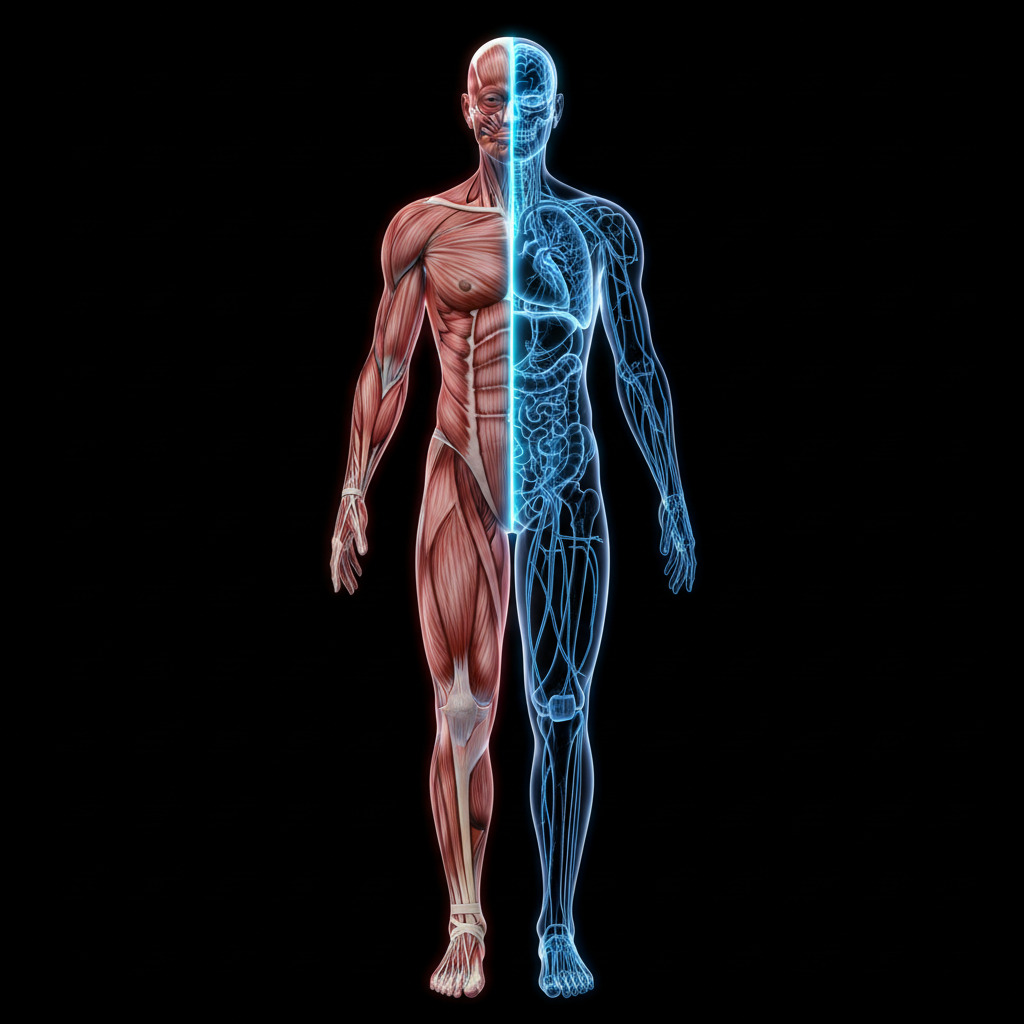
Research begins at the whole-organism level — studying systemic metabolic markers, energy expenditure, and physiological response to peptide intervention.
For laboratory research and educational purposes only.
Human Body
Research begins at the whole-organism level — studying systemic metabolic markers, energy expenditure, and physiological response to peptide intervention.
For laboratory research and educational purposes only.
For research use only — not for human consumption. No treatment claims.
Full Research Hub →Recommended Stacks
Cagrilintide is a key compound in these curated research stacks. Pair it with synergistic peptides for enhanced outcomes.
CagriSema Metabolic Protocol
GLP-1 + amylin combination — replicating the most potent pharmacological weight loss approach in Phase 3 trials.
How long will one vial last?
Based on standard research protocols, here's exactly what to expect from a single 5mg vial — and when to plan your next order.
Vial supply estimate is based on standard research protocol volumes. Actual duration will vary based on your specific protocol design.
Scientific Background
Mechanism of Action
Cagrilintide binds amylin receptors (AMY1–3) in the area postrema and hypothalamus, reducing food intake via central satiety signaling. Its fatty acid modification enables albumin binding, extending half-life to ~7 days. Combined with GLP-1 agonists, it provides complementary and synergistic appetite suppression.
Clinical Context
Cagrilintide is currently in Phase 3 trials as part of the CagriSema combination. It represents the next generation of weight management research beyond GLP-1 monotherapy.
Research Highlights
- Phase 2 trials showed 15.6% weight loss as monotherapy over 26 weeks
- CagriSema combination demonstrated up to 25% weight reduction — exceeding either agent alone
- Half-life of ~7 days enables once-weekly dosing
- Demonstrated improvements in cardiometabolic risk markers in obese subjects
Storage & Reconstitution
Store at -20°C. Reconstitute with 1 mL bacteriostatic water → 5 mg/mL. Stable 28 days at 2–8°C. Protect from light.
Key Studies
Cagrilintide with semaglutide 2.4 mg for the treatment of obesity (CagriSema Phase 2)
Enebo LB et al.
CagriSema combination demonstrated 15.6% weight loss with cagrilintide monotherapy and up to 17.1% with combination at 26 weeks.
PubMed →Pharmacokinetics and pharmacodynamics of cagrilintide
Lau DCW et al.
Cagrilintide demonstrated ~7-day half-life enabling once-weekly dosing with dose-dependent weight loss.
PubMed →CagriSema Phase 3 weight loss outcomes
Frias JP et al.
Phase 3 CagriSema data showed up to 25% weight reduction — exceeding either agent alone.
Pharmacokinetics
Bioavailability indicates how much of the compound reaches systemic circulation. Peak plasma is when blood levels are highest. Half-life determines dosing frequency — compounds with short half-lives require more frequent dosing to maintain therapeutic levels.
The volume of distribution reflects how widely the compound distributes into tissues. A higher Vd means the compound concentrates in tissues rather than staying in plasma.
Receptor Binding Profile
Central satiety signaling via area postrema and hypothalamus
Appetite suppression complementary to GLP-1 receptor pathway
Slows gastric emptying for prolonged satiety
Bone metabolism effects (secondary)
Side Effects & Adverse Events
- Nausea (35%)
- Vomiting (20%)
- Diarrhea (18%)
- Injection site reactions
- Headache
- Fatigue
- Decreased appetite
- Pancreatitis (theoretical)
- Hypoglycemia (with insulin)
Contraindications & Interactions
Synergistic Compounds
CagriSema combination (cagrilintide + semaglutide) shows additive weight loss up to 25% via complementary amylin and GLP-1 receptor mechanisms.
Cagrilintide 2.4 mg + Semaglutide 2.4 mg, both once weekly SubQ, titrate each independently.
View Compound →Lipotropic support and B12 repletion during aggressive caloric restriction from amylin/GLP-1 combination therapy.
Lipo-C 1 mL IM 2–3× per week alongside weekly cagrilintide injection.
View Compound →Transparent Global Sourcing
Manufactured
Sourced through our manufacturing partner in China
Independent Testing
Analytical reports available from Janoshik Analytical
Batch Verification
Batch-specific COAs with online verification via janoshik.com
US Fulfillment
Orders fulfilled from the United States