
GHK-Cu
Copper peptide complex for tissue regeneration and skin health.
Key Benefits
shown to increase collagen production by up to 70% in fibroblast cultures, improving skin firmness and joint integrity
accelerates tissue repair by activating growth factors and remodeling extracellular matrix proteins
upregulates superoxide dismutase and other antioxidant enzymes, reducing oxidative damage at the cellular level
modulates expression of over 30% of the human genome, reversing aging-associated gene patterns toward a younger profile
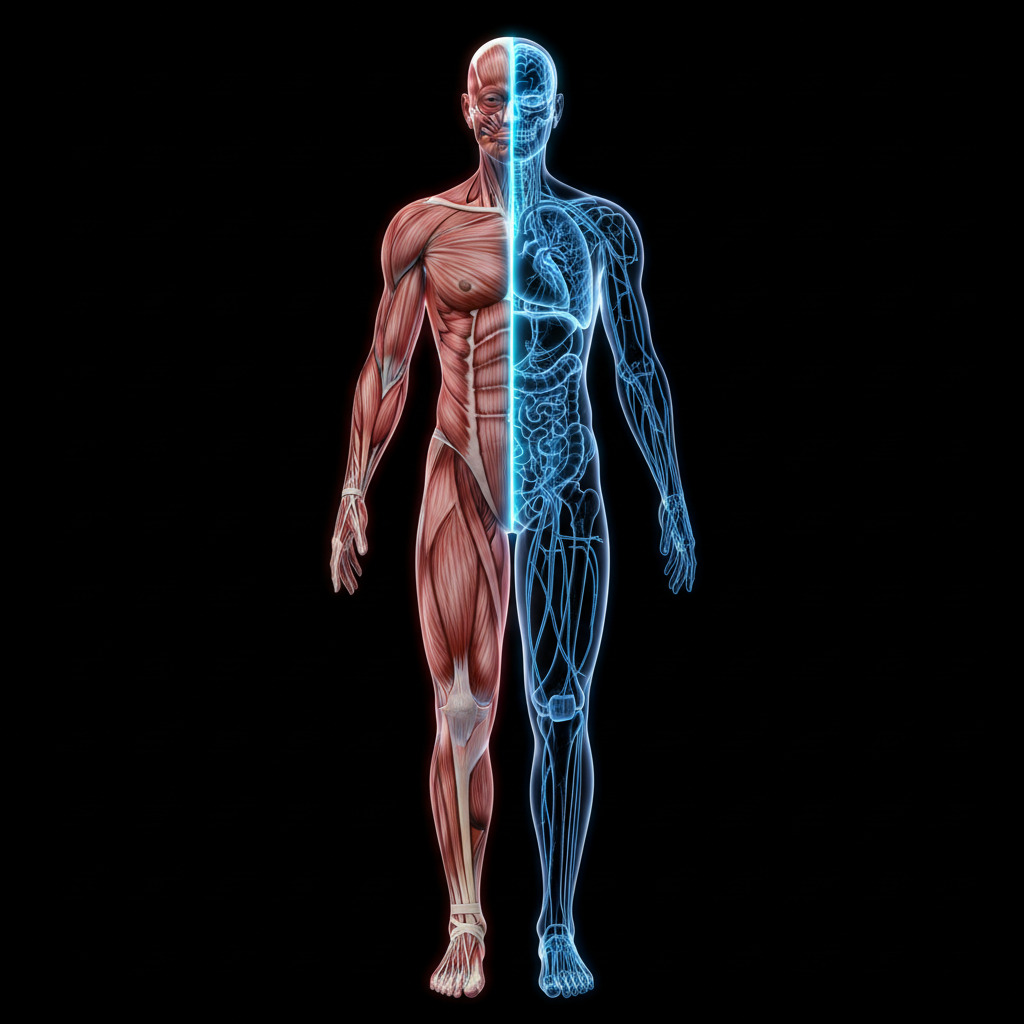
Active Signaling Pathway
GHK-Cu penetrates to the dermis where it activates fibroblasts via the SPARC gene and TGF-β1 pathway, triggering collagen and elastin synthesis. Its most remarkable property is modulating expression of over 30% of the human genome.
Investigated Pathways
Proposed Mechanism
GHK-Cu (Glycyl-L-Histidyl-L-Lysine copper complex) is a naturally occurring tripeptide found in human plasma, saliva, and urine. It binds copper(II) with high affinity and acts as a potent modulator of gene expression — studies show it can up-regulate over 30 genes involved in tissue repair and down-regulate genes associated with inflammation and cancer progression.
Research Highlights
- Loren Pickart's foundational research (1970s–2000s) established GHK-Cu as a key wound-healing and tissue-remodeling signal
- Shown to increase collagen synthesis by up to 70% in fibroblast cultures
- 2014 genome analysis revealed GHK-Cu modulates expression of 31.2% of the human genome — one of the broadest gene-regulatory effects of any known peptide
- Demonstrated neuroprotective effects in models of Parkinson's and Alzheimer's disease via antioxidant gene upregulation
Evidence is primarily from in vitro cell studies and animal models. Human data is limited or absent.
For laboratory research only
All Research Systems →For research use only — not for human consumption. No treatment claims.
Full Research Hub →Recommended Stacks
GHK-Cu is a key compound in these curated research stacks. Pair it with synergistic peptides for enhanced outcomes.
Radiant Skin & Anti-Aging
Target every layer of skin aging simultaneously — structural, regenerative, and oxidative.
How long will one vial last?
Based on standard research protocols, here's exactly what to expect from a single 50mg vial — and when to plan your next order.
Vial supply estimate is based on standard research protocol volumes. Actual duration will vary based on your specific protocol design.
Scientific Background
Mechanism of Action
GHK-Cu (Glycyl-L-Histidyl-L-Lysine copper complex) is a naturally occurring tripeptide found in human plasma, saliva, and urine. It binds copper(II) with high affinity and acts as a potent modulator of gene expression — studies show it can up-regulate over 30 genes involved in tissue repair and down-regulate genes associated with inflammation and cancer progression.
Clinical Context
GHK-Cu levels in human plasma decline from ~200 ng/mL at age 20 to ~80 ng/mL by age 60, correlating with reduced wound healing capacity and skin quality. Topical application has been validated in multiple clinical trials for reducing fine lines, improving skin density, and accelerating wound closure.
Research Highlights
- Loren Pickart's foundational research (1970s–2000s) established GHK-Cu as a key wound-healing and tissue-remodeling signal
- Shown to increase collagen synthesis by up to 70% in fibroblast cultures
- 2014 genome analysis revealed GHK-Cu modulates expression of 31.2% of the human genome — one of the broadest gene-regulatory effects of any known peptide
- Demonstrated neuroprotective effects in models of Parkinson's and Alzheimer's disease via antioxidant gene upregulation
Storage & Reconstitution
Key Studies
The human tripeptide GHK-Cu in prevention of oxidative stress and degenerative conditions of aging
Pickart L et al.
GHK-Cu modulates expression of 31.2% of the human genome, reversing aging-associated gene patterns and upregulating repair pathways.
PubMed →GHK peptide as a natural modulator of multiple cellular pathways in skin regeneration
Pickart L et al.
GHK-Cu increases collagen synthesis by up to 70% in fibroblast cultures and accelerates wound closure in multiple models.
PubMed →Topical copper peptide improves wound healing
Gorouhi F et al.
Topical GHK-Cu significantly improved wound healing rates and skin quality in clinical studies with excellent tolerability.
PubMed →Pharmacokinetics
Bioavailability indicates how much of the compound reaches systemic circulation. Peak plasma is when blood levels are highest. Half-life determines dosing frequency — compounds with short half-lives require more frequent dosing to maintain therapeutic levels.
The volume of distribution reflects how widely the compound distributes into tissues. A higher Vd means the compound concentrates in tissues rather than staying in plasma.
Receptor Binding Profile
Delivers bioavailable copper to tissues, activating copper-dependent enzymes
Stimulates collagen and elastin synthesis in fibroblasts
Promotes healthy tissue remodeling by balancing matrix metalloproteinase activity
Promotes angiogenesis for improved tissue perfusion
Modulates over 30% of human genome toward a younger expression profile
Side Effects & Adverse Events
- Mild skin irritation with topical use
- Injection site redness (SubQ)
- Temporary skin darkening at application site (copper pigmentation)
- Nausea at high doses
- Copper toxicity at extreme doses (theoretical — far above research doses)
Contraindications & Interactions
Synergistic Compounds
GHK-Cu is a key component of the GLOW blend; standalone use amplifies collagen and gene-regulatory effects.
GHK-Cu 1 mg SubQ or topical daily + GLOW blend for comprehensive skin repair.
View Compound →Complementary healing mechanisms — GHK-Cu's gene expression reset and collagen synthesis combine with BPC-157's angiogenic repair.
GHK-Cu 1 mg + BPC-157 250 mcg, both SubQ, once daily.
View Compound →GHK-Cu addresses structural skin aging (collagen/elastin) while Snap-8 targets dynamic expression lines — comprehensive anti-aging.
GHK-Cu topical AM + Snap-8 topical PM for full-spectrum skin research.
View Compound →Transparent Global Sourcing
Manufactured
Sourced through our manufacturing partner in China
Independent Testing
Analytical reports available from Janoshik Analytical
Batch Verification
Batch-specific COAs with online verification via janoshik.com
US Fulfillment
Orders fulfilled from the United States