

Tesamorelin / Ipamorelin
Dual-peptide GHRH + GHRP blend — 5 mg Tesamorelin and 5 mg Ipamorelin per vial. 10 mg total.
Key Benefits
activates both GHRH and GHRP receptor pathways simultaneously for synergistic GH pulse amplification
FDA-approved GHRH analog with 26–38 min half-life for sustained pituitary stimulation and visceral fat reduction
selective GHS-R1a agonist with 10–20× GH pulse amplitude and no cortisol or prolactin elevation
single vial, single reconstitution, single injection delivers both peptides simultaneously
Active Signaling Pathway
Investigated Pathways
Proposed Mechanism
Tesamorelin (GHRH analog) binds GHRH receptors on pituitary somatotrophs, triggering cAMP-mediated GH synthesis. Ipamorelin (GHRP) binds GHS-R1a via a cAMP-independent pathway. The dual-signal combination activates both receptor pathways simultaneously, producing synergistic GH pulses that exceed either peptide alone. Tesamorelin's trans-3-hexenoic acid modification extends its half-life to 26–38 minutes, providing sustained GHRH stimulation while Ipamorelin's 2-hour half-life delivers discrete GH pulses.
Research Highlights
- Dual-signal GH release — GHRH + GHRP combination activates both pituitary receptor pathways for synergistic GH pulse amplification
- Tesamorelin component: FDA-approved GHRH analog with Phase 3 data showing 15–18% visceral fat reduction over 26 weeks
- Ipamorelin component: selective GHS-R1a agonist with 10–20× GH pulse amplitude increase and no cortisol or prolactin elevation
- Pre-blended convenience — single vial, single reconstitution, single injection delivers both peptides simultaneously
Human observational or open-label study data exists. Controlled trial data may be limited. Not a treatment recommendation.
For laboratory research only
All Research Systems →Human Body
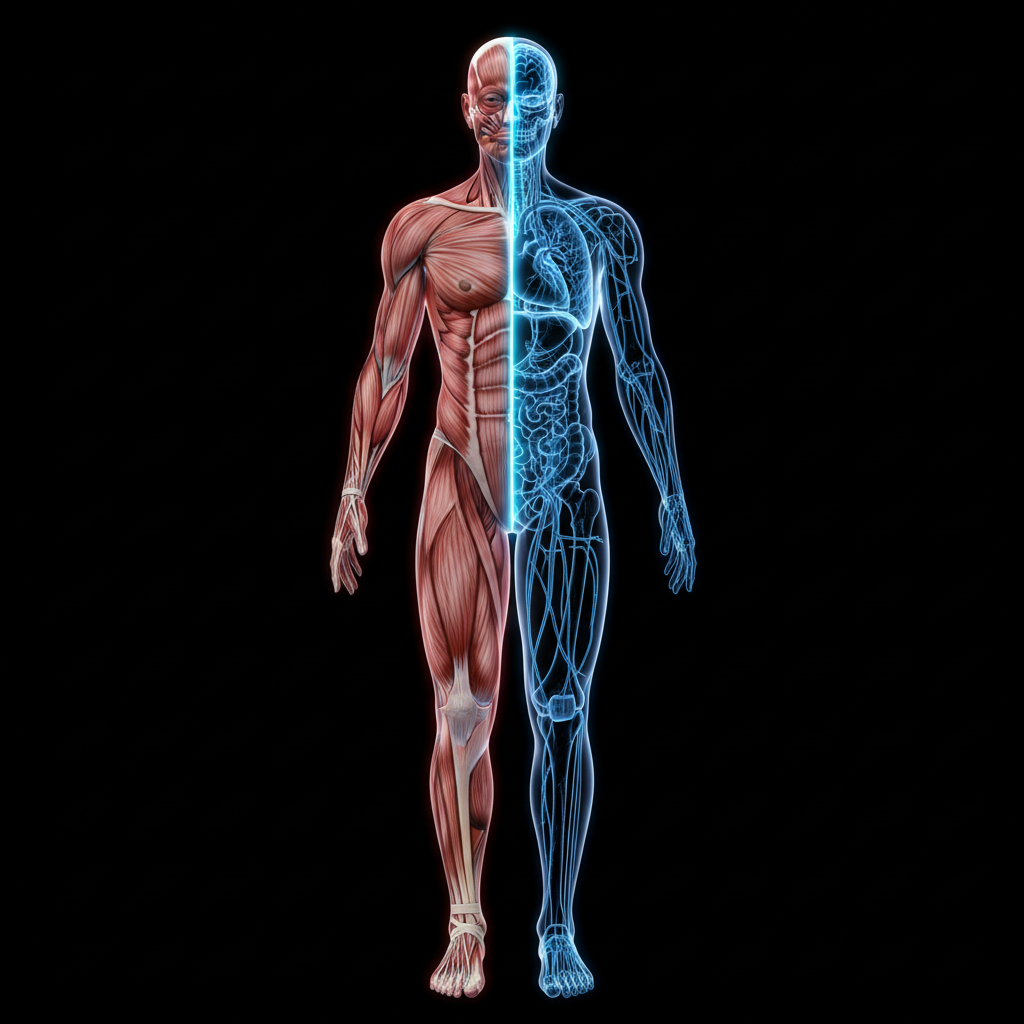
Research begins at the whole-organism level — studying systemic metabolic markers, energy expenditure, and physiological response to peptide intervention.
For laboratory research and educational purposes only.
Human Body
Research begins at the whole-organism level — studying systemic metabolic markers, energy expenditure, and physiological response to peptide intervention.
For laboratory research and educational purposes only.
For research use only — not for human consumption. No treatment claims.
Full Research Hub →How long will one vial last?
Based on standard research protocols, here's exactly what to expect from a single 10mg total (5mg + 5mg) vial — and when to plan your next order.
Vial supply estimate is based on standard research protocol volumes. Actual duration will vary based on your specific protocol design.
Scientific Background
Mechanism of Action
Tesamorelin (GHRH analog) binds GHRH receptors on pituitary somatotrophs, triggering cAMP-mediated GH synthesis. Ipamorelin (GHRP) binds GHS-R1a via a cAMP-independent pathway. The dual-signal combination activates both receptor pathways simultaneously, producing synergistic GH pulses that exceed either peptide alone. Tesamorelin's trans-3-hexenoic acid modification extends its half-life to 26–38 minutes, providing sustained GHRH stimulation while Ipamorelin's 2-hour half-life delivers discrete GH pulses.
Clinical Context
The Tesamorelin + Ipamorelin combination is one of the most studied GHRH + GHRP pairings in peptide research. Tesamorelin provides sustained GHRH stimulation via its extended half-life; Ipamorelin adds selective GHRP activation without the cortisol and prolactin side effects of GHRP-2 or GHRP-6. The pre-blended format eliminates the need for separate reconstitution and co-administration.
Research Highlights
- Dual-signal GH release — GHRH + GHRP combination activates both pituitary receptor pathways for synergistic GH pulse amplification
- Tesamorelin component: FDA-approved GHRH analog with Phase 3 data showing 15–18% visceral fat reduction over 26 weeks
- Ipamorelin component: selective GHS-R1a agonist with 10–20× GH pulse amplitude increase and no cortisol or prolactin elevation
- Pre-blended convenience — single vial, single reconstitution, single injection delivers both peptides simultaneously
Storage & Reconstitution
Key Studies
Effects of Tesamorelin on Visceral Fat and Liver Fat in HIV-Infected Patients (MAINTAIN trial)
Falutz J et al.
Tesamorelin component reduced visceral adipose tissue by 15–18% over 26 weeks — the basis for FDA approval as Egrifta.
PubMed →Ipamorelin, the first selective growth hormone secretagogue
Raun K et al.
Ipamorelin component stimulates GH release with high selectivity — does not elevate cortisol or prolactin at any dose tested.
PubMed →Growth hormone-releasing properties of ipamorelin
Johansen PB et al.
Ipamorelin produced dose-dependent GH pulses with no desensitization at standard doses in multiple animal models.
PubMed →Pharmacokinetics
Bioavailability indicates how much of the compound reaches systemic circulation. Peak plasma is when blood levels are highest. Half-life determines dosing frequency — compounds with short half-lives require more frequent dosing to maintain therapeutic levels.
The volume of distribution reflects how widely the compound distributes into tissues. A higher Vd means the compound concentrates in tissues rather than staying in plasma.
Receptor Binding Profile
Robust pulsatile GH release from pituitary somatotrophs via cAMP cascade
GH pulse stimulation via cAMP-independent pathway; no cortisol or prolactin elevation
Downstream hepatic IGF-1 production; visceral fat reduction and body composition effects
Side Effects & Adverse Events
- Injection site reactions
- Mild fluid retention
- Transient flushing (Ipamorelin component)
- Joint pain (Tesamorelin component)
- Headache
- Mild water retention
- Glucose elevation (monitor in diabetes — Tesamorelin component)
- Elevated IGF-1 (monitor levels)
Contraindications & Interactions
Synergistic Compounds
Tesamorelin/Ipamorelin blend targets visceral fat via GH/IGF-1 axis while AOD-9604 directly activates adipocyte lipolysis — complementary fat loss mechanisms.
Tesamorelin/Ipamorelin blend SubQ daily + AOD-9604 300 mcg fasted AM.
View Compound →GH/IGF-1 elevation from the blend synergizes with BPC-157's tissue repair and angiogenic mechanisms for enhanced recovery.
Tesamorelin/Ipamorelin blend SubQ daily + BPC-157 250–500 mcg SubQ daily.
View Compound →Transparent Global Sourcing
Manufactured
Sourced through our manufacturing partner in China
Independent Testing
Analytical reports available from Janoshik Analytical
Batch Verification
Batch-specific COAs with online verification via janoshik.com
US Fulfillment
Orders fulfilled from the United States