
AOD-9604
HGH fragment targeting fat metabolism without IGF-1 side effects.
Key Benefits
activates lipolysis in adipose tissue without systemic HGH side effects
safe metabolic profile confirmed in clinical trials
preclinical data shows regenerative effects on joint tissue
blocks new fat storage at the cellular level
Active Signaling Pathway
Investigated Pathways
Proposed Mechanism
AOD-9604 mimics the lipolytic domain of hGH by binding fat cell receptors and activating beta-3 adrenergic pathways. It stimulates breakdown of stored triglycerides (lipolysis) while simultaneously blocking new fat formation (lipogenesis), without activating the IGF-1 axis or causing insulin resistance.
Research Highlights
- Phase IIb/III clinical trials demonstrated significant reduction in body fat in obese subjects over 12 weeks
- Does not affect blood glucose or insulin sensitivity — key safety advantage over full HGH
- Shown to stimulate cartilage and bone repair in preclinical models
- FDA GRAS (Generally Recognized As Safe) designation obtained in 2014
Evidence is primarily from in vitro cell studies and animal models. Human data is limited or absent.
For laboratory research only
All Research Systems →Human Body
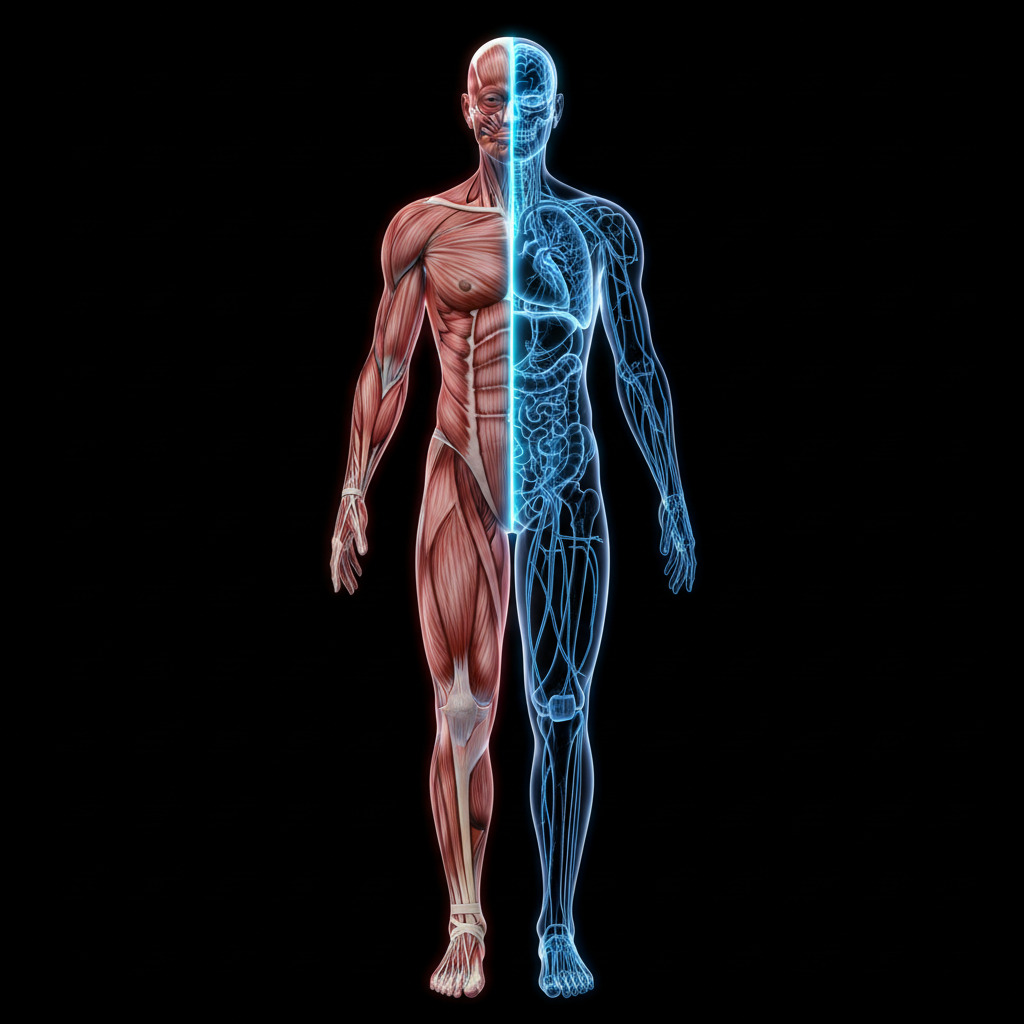
Research begins at the whole-organism level — studying systemic metabolic markers, energy expenditure, and physiological response to peptide intervention.
For laboratory research and educational purposes only.
Human Body
Research begins at the whole-organism level — studying systemic metabolic markers, energy expenditure, and physiological response to peptide intervention.
For laboratory research and educational purposes only.
For research use only — not for human consumption. No treatment claims.
Full Research Hub →Recommended Stacks
AOD-9604 is a key compound in these curated research stacks. Pair it with synergistic peptides for enhanced outcomes.
Ratatouille3 Advanced Protocol
Triple receptor agonism — the most potent metabolic research stack available with full titration support.
How long will one vial last?
Based on standard research protocols, here's exactly what to expect from a single 5mg vial — and when to plan your next order.
Vial supply estimate is based on standard research protocol volumes. Actual duration will vary based on your specific protocol design.
Scientific Background
Mechanism of Action
AOD-9604 mimics the lipolytic domain of hGH by binding fat cell receptors and activating beta-3 adrenergic pathways. It stimulates breakdown of stored triglycerides (lipolysis) while simultaneously blocking new fat formation (lipogenesis), without activating the IGF-1 axis or causing insulin resistance.
Clinical Context
AOD-9604 was originally developed by Monash University as an anti-obesity drug. Its clean safety profile and targeted fat-loss mechanism make it one of the most studied metabolic peptides in clinical settings.
Research Highlights
- Phase IIb/III clinical trials demonstrated significant reduction in body fat in obese subjects over 12 weeks
- Does not affect blood glucose or insulin sensitivity — key safety advantage over full HGH
- Shown to stimulate cartilage and bone repair in preclinical models
- FDA GRAS (Generally Recognized As Safe) designation obtained in 2014
Storage & Reconstitution
Store lyophilized at -20°C. Reconstitute with 1 mL bacteriostatic water → 5 mg/mL. On a 100-unit insulin syringe, 1 unit = 50 mcg. Stable 4 weeks at 2–8°C after reconstitution.
Key Studies
AOD9604: an anti-obesity drug with some of the effects of growth hormone
Heffernan M et al.
AOD-9604 stimulated fat metabolism and reduced body fat in obese rodents without affecting blood glucose or IGF-1 levels.
PubMed →The lipolytic effect of a fragment of human growth hormone
Ng FM et al.
The 176-191 fragment of HGH retains full lipolytic activity via β3-adrenergic receptor activation without growth-promoting effects.
PubMed →Safety and efficacy of AOD9604 in obese subjects
Stier H et al.
Phase 2b/3 clinical trials confirmed AOD-9604's favorable safety profile and significant fat reduction in obese subjects.
Pharmacokinetics
Bioavailability indicates how much of the compound reaches systemic circulation. Peak plasma is when blood levels are highest. Half-life determines dosing frequency — compounds with short half-lives require more frequent dosing to maintain therapeutic levels.
The volume of distribution reflects how widely the compound distributes into tissues. A higher Vd means the compound concentrates in tissues rather than staying in plasma.
Receptor Binding Profile
Activates hormone-sensitive lipase in adipocytes for triglyceride breakdown
Does not activate GH receptor — no growth-promoting or IGF-1 effects
Direct lipolytic activity without systemic GH side effects
Side Effects & Adverse Events
- Mild injection site reactions
- Transient fatigue
- Headache
- Nausea
- None documented in clinical trials
Contraindications & Interactions
Synergistic Compounds
Tesamorelin targets visceral fat via GH/IGF-1 axis while AOD-9604 directly activates adipocyte lipolysis — complementary fat loss mechanisms.
AOD-9604 300 mcg fasted AM + Tesamorelin 1 mg SubQ daily.
View Compound →AOD-9604 and HGH Fragment 176-191 are closely related compounds with the same lipolytic mechanism — can alternate for variety.
Use AOD-9604 or HGH Fragment 176-191 interchangeably at 300–500 mcg fasted daily.
View Compound →AOD-9604 activates lipolysis while 5-Amino-1MQ inhibits NNMT to shrink adipocytes — complementary fat reduction mechanisms.
AOD-9604 300 mcg SubQ fasted AM + 5-Amino-1MQ 75 mg oral daily.
View Compound →Transparent Global Sourcing
Manufactured
Sourced through our manufacturing partner in China
Independent Testing
Analytical reports available from Janoshik Analytical
Batch Verification
Batch-specific COAs with online verification via janoshik.com
US Fulfillment
Orders fulfilled from the United States