
Wolverine Stack
Multi-peptide regenerative stack for accelerated healing and tissue repair.
Key Benefits
combines BPC-157 angiogenic signaling with TB-500 systemic cell migration
BPC-157 shown to accelerate connective tissue repair via VEGFR2 and FAK pathways
TB-500 travels via bloodstream to reach distant or deep injury sites
both BPC-157 and TB-500 suppress inflammatory cytokines (IL-6, TNF-α)
Active Signaling Pathway
Investigated Pathways
Proposed Mechanism
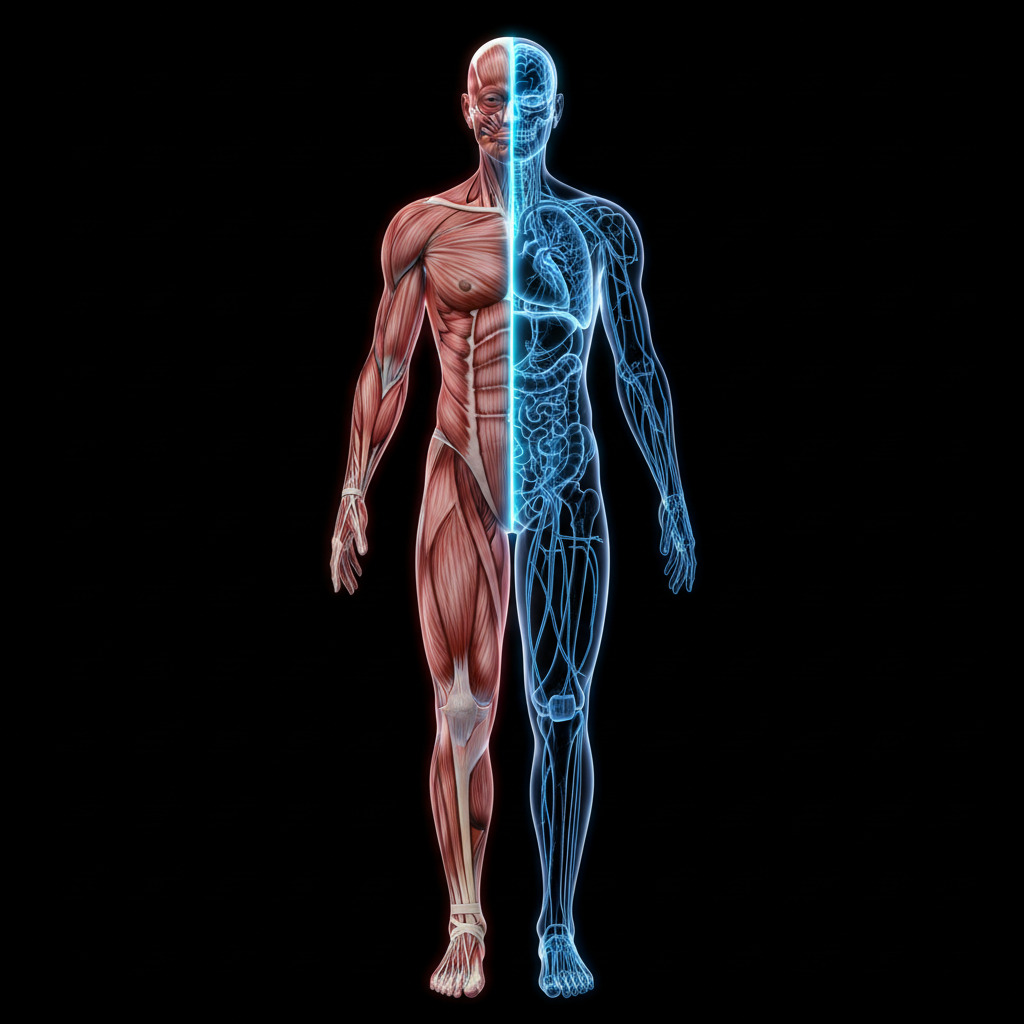
The Wolverine Stack combines two complementary repair mechanisms: BPC-157 activates growth factor receptors (VEGFR2, FAK/paxillin) and promotes angiogenesis at injury sites; TB-500 (Thymosin Beta-4) sequesters G-actin for cytoskeletal remodeling and distributes systemically to reach distant injury sites via the bloodstream.
Research Highlights
- BPC-157 shown to heal tendon-to-bone injuries 2× faster in rodent models via VEGFR2 activation
- TB-500 demonstrated systemic tissue repair via blood-borne distribution to distant injury sites
- BPC-157 provides localized angiogenic signaling; TB-500 provides systemic anti-inflammatory coverage
- Stack combination provides complementary and synergistic healing mechanisms across multiple tissue types
Human observational or open-label study data exists. Controlled trial data may be limited. Not a treatment recommendation.
For research use only — not for human consumption. No treatment claims.
Full Research Hub →How long will one vial last?
Based on standard research protocols, here's exactly what to expect from a single 5mg BPC-157 + 5mg TB-500 vial — and when to plan your next order.
Vial supply estimate is based on standard research protocol volumes. Actual duration will vary based on your specific protocol design.
Scientific Background
Mechanism of Action
The Wolverine Stack combines two complementary repair mechanisms: BPC-157 activates growth factor receptors (VEGFR2, FAK/paxillin) and promotes angiogenesis at injury sites; TB-500 (Thymosin Beta-4) sequesters G-actin for cytoskeletal remodeling and distributes systemically to reach distant injury sites via the bloodstream.
Clinical Context
Both components of the Wolverine Stack have independent preclinical validation. The combination is designed to address tissue repair at multiple levels — structural (BPC-157) and systemic/vascular (TB-500). The classic BPC-157 + TB-500 pairing is one of the most widely used recovery protocols in peptide research.
Research Highlights
- BPC-157 shown to heal tendon-to-bone injuries 2× faster in rodent models via VEGFR2 activation
- TB-500 demonstrated systemic tissue repair via blood-borne distribution to distant injury sites
- BPC-157 provides localized angiogenic signaling; TB-500 provides systemic anti-inflammatory coverage
- Stack combination provides complementary and synergistic healing mechanisms across multiple tissue types
Storage & Reconstitution
Store lyophilized powder at -20°C. Reconstitute each vial separately with bacteriostatic water (2 mL per vial). After reconstitution, both can be drawn into the same syringe for co-administration.
Reconstitution & Dosage Guide
Single Combo Vial — One Reconstitution
BPC-157 (5 mg) and TB-500 (5 mg) are pre-blended in one vial. Add 2 mL BAC water to the single vial. One injection delivers both peptides simultaneously — no separate draws needed.
Reconstitution
Vial contents
10 mg total
BAC water
2 mL
Concentration
5 mg/mL
BAC vials needed
1 vial
Each 0.1 mL drawn = 500 mcg BPC-157 + 500 mcg TB-500. Both peptides are delivered in every injection at a 1:1 ratio.
Syringe Draw (U-100)
BPC-157 500 mcg + TB-500 500 mcg
Start dose
BPC-157 1 mg + TB-500 1 mg
Standard dose
BPC-157 2 mg + TB-500 2 mg
Full dose
Storage after reconstitution: 14–28 days at 2–8 °C. Protect from light.
Doses per vial: 10 doses at start dose (10 IU) · 5 doses at standard (20 IU) · 2–3 doses at full dose (40 IU)
Weekly Protocol Schedule
20–40 IU (0.20–0.40 mL) daily
1 mg–2 mg of each peptide per injection
10–20 IU (0.10–0.20 mL) daily
500 mcg–1 mg of each peptide per injection
Injection site: Abdomen (periumbilical fat) preferred. TB-500 distributes systemically so any SubQ site works — no need to inject near the injury.
Key Studies
Stable gastric pentadecapeptide BPC 157: novel therapy in gastrointestinal tract
Sikiric P et al.
BPC-157 component demonstrated comprehensive healing of tendon-to-bone injuries via VEGFR2 and FAK pathway activation.
PubMed →Thymosin beta4 promotes cardiac repair after myocardial infarction
Goldstein AL et al.
TB-500 component demonstrated systemic tissue repair via blood-borne distribution, reaching distant injury sites.
PubMed →BPC 157 and standard angiogenic growth factors: gastrointestinal tract healing
Gwyer D et al.
Combined recovery review confirming synergistic healing mechanisms of BPC-157 and TB-500 across multiple tissue types.
PubMed →Pharmacokinetics
Bioavailability indicates how much of the compound reaches systemic circulation. Peak plasma is when blood levels are highest. Half-life determines dosing frequency — compounds with short half-lives require more frequent dosing to maintain therapeutic levels.
The volume of distribution reflects how widely the compound distributes into tissues. A higher Vd means the compound concentrates in tissues rather than staying in plasma.
Receptor Binding Profile
Angiogenesis and new blood vessel formation at injury sites
Cell migration and proliferation for tissue repair
Cytoskeletal remodeling and systemic cell migration
Anti-inflammatory cytokine suppression (IL-6, TNF-α)
Side Effects & Adverse Events
- Injection site reactions
- Mild fatigue
- Headache
- Nausea
- None documented for either component
Contraindications & Interactions
Synergistic Compounds
GHK-Cu's gene expression reset and collagen synthesis add a third healing mechanism to the BPC-157 + TB-500 stack.
Wolverine Stack + GHK-Cu 1 mg SubQ daily for comprehensive tissue repair.
View Compound →GH/IGF-1 elevation from sermorelin synergizes with the Wolverine Stack's repair mechanisms for enhanced recovery.
Wolverine Stack SubQ + Sermorelin 300 mcg pre-sleep SubQ.
View Compound →Transparent Global Sourcing
Manufactured
Sourced through our manufacturing partner in China
Independent Testing
Analytical reports available from Janoshik Analytical
Batch Verification
Batch-specific COAs with online verification via janoshik.com
US Fulfillment
Orders fulfilled from the United States